Trinidad and...
Why RABZ Is Switching to K-1 Rules (And What It Means for Fans)
If you’ve been watching RABZ Fight Promotions for a while, you might notice something different in the ring at our upcoming Caribbean kickboxing events.
The fights are faster.
The exchanges are heavier.
And the action doesn’t pause as much.
That’s not an accident.
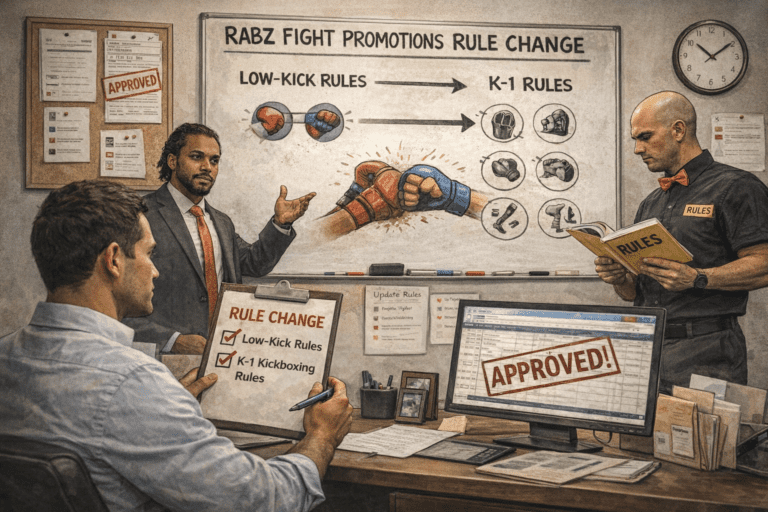
RABZ is officially transitioning from traditional low-kick kickboxing rules to K-1 style kickboxing rules, a globally respected ruleset that sits right between kickboxing and Muay Thai.
Here’s what that actually means, in plain language.
What Rules Did RABZ Use Before?
Up until now, RABZ followed the unified low-kick kickboxing rules enforced by our local sanctioning body, the Island Kickboxing Federation of Trinidad and Tobago (IKBTT).
These rules focus on:
- Boxing punches
- Kicks to the legs, body, and head
- Limited clinching
- No knees or backfists
It’s a clean, technical form of combat sport, and it’s where many Caribbean fighters begin their journey.
Why the Switch to K-1 Kickboxing Rules?
K-1 rules are designed for excitement, flow, and realism, while still keeping athlete safety at the forefront.
They are also one of the most common rulesets used worldwide, which makes it easier for Caribbean fighters to transition into MMA, professional boxing, or international kickboxing promotions later in their careers.
Simply put, K-1 prepares fighters for the next level, and it gives fans better fights.
What’s New Under K-1 Rules?
Here’s what fans will notice immediately at a live kickboxing event in the Caribbean.
Knees to the Body
Fighters are now allowed to throw knees to the body.
This adds pressure, intensity, and forces constant engagement.
No stalling. No coasting.
Backfists Are Allowed
Spinning and backfist techniques are now part of the game.
This creates more unpredictable moments and faster exchanges.
Catching Kicks Is Legal
A fighter can now catch a kick and counter once before releasing.
This rewards timing and fight IQ without turning bouts into grappling matches.
Faster Pace Overall
Clinching is tightly controlled. One strike, then release.
The result is cleaner action and less downtime.
For fans, that means more movement, more damage, and more moments.
What Has NOT Changed?
Just as important, here’s what is still not allowed:
- No elbows
- No headbutts
- No throws, sweeps, or takedowns
- No ground fighting
This is still kickboxing, not Muay Thai or MMA.
The fights stay standing, explosive, and easy to follow.
How Are Fights Scored?
RABZ uses the standard 10-Point Must System, the same scoring system used in boxing and many major combat sports leagues.
Judges prioritize:
1. Knockdowns
2. Damage
3. Clean, effective strikes
4. Aggression and ring control
In other words, fighters are rewarded for actually fighting, not just touching and moving.
Why This Matters for the Caribbean Fight Scene
This rule change isn’t just about excitement. It’s about growth.
K-1 rules:
- Make fights more entertaining for fans
- Help athletes develop skills that translate globally
- Align Caribbean kickboxing with international standards
For RABZ Fight Promotions, this move strengthens our role as a true Caribbean Fight Promotion, building fighters who are ready for bigger stages while delivering unforgettable fight night experiences at home.
What Should Fans Expect Going Forward?
Expect:
- More action
- More urgency
- More finishes
- Less stalling
If you’ve never attended a live kickboxing or boxing event in Trinidad and Tobago, this is the perfect time to experience it.
The sport just got sharper.
And the fights just got realer.